
Understanding Back and Lay Bets in T20 Exchange Betting
T20 exchange betting has changed the way people approach online cricket betting. Unlike traditional bookmakers, exchange betting allows users to bet for or against an outcome. The two core concepts that make this possible are Back bets and Lay bets. Understanding how these bets work is essential for anyone who wants to trade smartly and take advantage of live T20 match movements.
This guide explains Back and Lay bets in simple language, with examples, strategies, and practical tips suitable for both beginners and experienced exchange users.
What Is Exchange Betting in T20 Cricket?
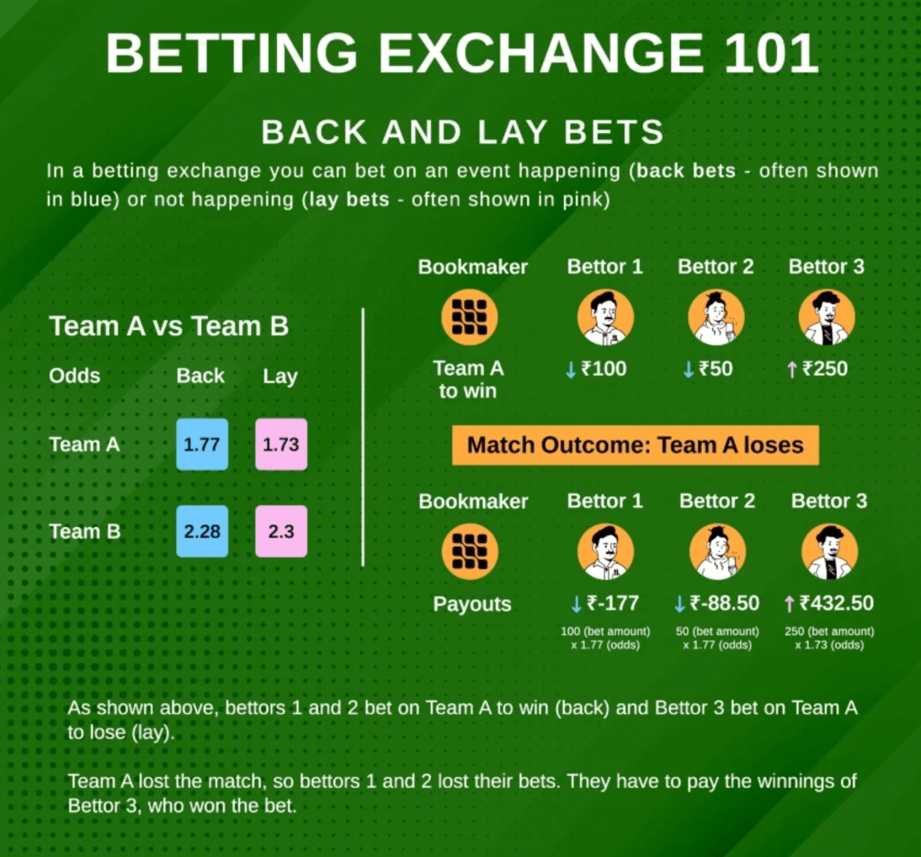
Exchange betting is a peer-to-peer betting system where users bet against each other instead of a bookmaker. The platform only facilitates the bet and earns a small commission on winnings.
In T20 cricket, exchange betting becomes highly effective because matches are fast-paced and odds change frequently. Every over, wicket, or boundary impacts the market, creating multiple trading opportunities.
Unlike bookmaker betting where options are limited, exchange betting allows:
- Better odds
- More control over bets
- Ability to trade positions during live matches
What Is a Back Bet?
Definition of a Back Bet
A Back bet means betting for an outcome to happen. It is similar to traditional betting where you support a team, player, or event result.
If your selected outcome occurs, you win the bet.
How Back Bets Work in T20 Matches
Examples of Back bets in T20 cricket include:
- Backing a team to win the match
- Backing a batsman to score above a certain number of runs
- Backing a team to win after a strong powerplay
Back bets can be placed before the match or during live play. Many traders use Back bets when momentum is clearly shifting in favor of a team.
When to Use a Back Bet
A Back bet is ideal when:
- A team is dominating the match
- A strong batsman is well set
- Pitch and conditions favor one side
- Odds offer good value
Back bets are generally considered easier for beginners because the risk is limited to the stake amount.
What Is a Lay Bet?
Definition of a Lay Bet
A Lay bet means betting against an outcome. Instead of backing a team to win, you are betting that the outcome will not happen.
In simple terms, you act like a bookmaker by accepting someone else’s Back bet.
How Lay Bets Work in Live T20 Betting
Lay bets are commonly used during live matches when conditions change rapidly.
Examples:
- Laying a favorite team after losing early wickets
- Laying a batsman when a new bowler enters the attack
- Laying a team when required run rate increases sharply
Lay betting allows traders to profit even when teams fail to perform as expected.
When to Use a Lay Bet
Lay bets are effective when:
- Odds are too low for a risky situation
- A team is under pressure
- Match momentum is changing
- You want to lock profits by hedging a Back bet
Lay betting requires understanding of liability, which makes risk management essential.
Back Bet vs Lay Bet – Key Differences
| Feature | Back Bet | Lay Bet |
|---|---|---|
| Betting Direction | For an outcome | Against an outcome |
| Risk | Limited to stake | Higher (liability involved) |
| Suitable For | Beginners & traders | Experienced users |
| Profit Method | Outcome must win | Outcome must lose |
| Usage | Pre-match & live | Mostly live trading |
Both bets are powerful tools when used correctly in T20 exchange betting.
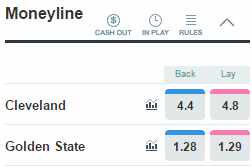
Real T20 Match Examples of Back and Lay Bets
Example 1 – Back Bet Scenario
A team scores 65 runs in the powerplay with no wickets lost. Odds improve in their favor. Backing this team at that moment offers strong value.
Example 2 – Lay Bet Scenario
A strong team loses two quick wickets early. Despite being favorites, conditions shift. Laying the team at low odds can generate profit if pressure continues.
Example 3 – Combining Back and Lay for Trading
A trader backs a team early at high odds. As odds shorten due to good performance, the trader places a Lay bet to lock profit regardless of the final result.
This strategy is known as betting trading and is widely used in exchange markets.
Common Mistakes to Avoid in Back and Lay Betting
- Ignoring liability in Lay bets
- Overtrading during live matches
- Chasing losses emotionally
- Betting without analyzing match conditions
- Using high stakes without experience
Avoiding these mistakes improves long-term consistency.
Risk Management Tips for Exchange Betting
- Always calculate Lay bet liability
- Start with small stakes
- Set daily profit and loss limits
- Avoid betting under emotional pressure
- Focus on discipline, not excitement
Risk control is more important than winning individual bets.
Why Back and Lay Bets Are Powerful in T20 Exchange Betting
T20 cricket offers:
- Rapid odds movement
- Multiple entry and exit points
- High volatility
- Opportunities to trade, not just bet
Back and Lay bets provide flexibility that traditional bookmakers cannot match.
Is Back and Lay Betting Safe for Beginners?
Back betting is suitable for beginners due to limited risk. Lay betting should be used only after understanding liability and market behavior.
Beginners are advised to:
- Practice with low stakes
- Observe live markets
- Learn odds movement patterns
With time and discipline, both betting types can be used effectively.
Frequently Asked Questions (FAQs)
Can beginners use Lay bets?
Yes, but only with small stakes and proper understanding of liability.
What is liability in Lay betting?
Liability is the amount you may lose if the Lay bet result happens.
Which is safer, Back or Lay betting?
Back betting is safer for beginners due to limited risk.
Can I use both Back and Lay in one match?
Yes, many traders use both to manage risk and secure profits.
Conclusion
Understanding Back and Lay bets is essential for success in T20 exchange betting. While Back bets help you support outcomes, Lay bets allow you to profit from failures and market movement. When combined with discipline, analysis, and proper risk management, these tools give bettors unmatched control.
Learning gradually and trading smartly is the key to long-term success in exchange betting.